
The Dawn of Coral Reef Restoration: From Coral Gardening to Ocean Cleanup Tech
Addressing the massive scale of ocean degradation requires bold, innovative solutions. Global conservationists are moving beyond simple protection to active restoration. This shift represents a proactive fight for marine ecosystems. New technologies and refined ecological practices, such as Coral Reef Restoration, are offering a beacon of hope. These efforts focus on rebuilding key habitats and cleaning up pollution at its source.
Rebuilding Coral Reefs Restoration: The Art of Restoration
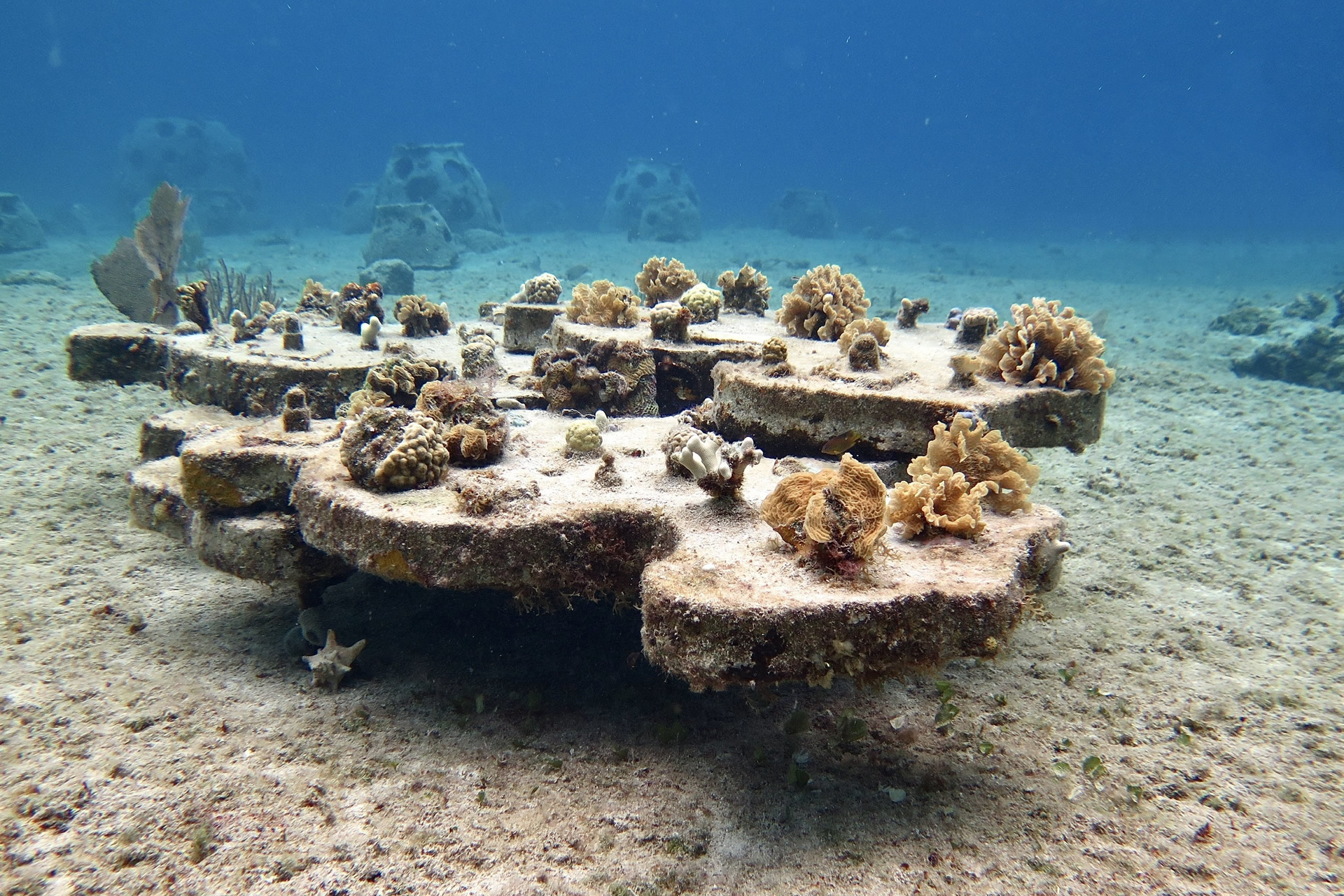
Coral reefs, the “rainforests of the sea,” are collapsing globally. Active intervention is now necessary for their survival. Modern restoration employs several key techniques. Coral gardening is a widespread, successful method. It involves creating underwater nurseries. Small coral fragments, often from resilient species, are hung on metal or PVC “trees.” They grow quickly in these controlled, predator-free environments. Once large enough, these fragments are outplanted onto degraded reefs. They are secured with specialized glues or ties. The goal is to jump-start natural recovery.
Another cutting-edge method is micro-fragmentation. Scientists cut corals into tiny pieces, which accelerates their growth rate. These micro-fragments fuse back together much faster than naturally grown colonies. This technique is especially useful for slow-growing, massive reef-building corals. Success rates for outplanted corals often range between 60% and 70%. Careful site selection is crucial for long-term survival. Restoration is not a silver bullet, but it helps sustain biodiversity and ecosystem function until global threats are mitigated.
Pioneering the Cleanup: Innovative Anti-Pollution Technologies
The relentless flow of plastic into the ocean demands technological countermeasures. Innovative systems are now targeting pollution both on land and at sea. The Ocean Cleanup project uses large, U-shaped floating barriers. These barriers passively concentrate plastic debris in ocean gyres. This allows for efficient retrieval by support vessels. In rivers, systems like the Interceptor capture plastic before it ever reaches the open ocean. Rivers are major plastic conduits.
Smaller, localized solutions are also vital. The Seabin Project installs floating trash cans in marinas and ports. These devices use a pump to filter floating debris, including microplastics and oil slicks. This prevents coastal accumulation. Further advancements include using Artificial Intelligence (AI) to track plastic movement. Bioremediation uses specialized microorganisms to break down toxic substances. While preventing pollution remains the priority, these technologies are essential for remediation.
The Future of Seafood: Sustainable Aquaculture Practices
The growing global demand for seafood places immense pressure on wild fish stocks. Sustainable aquaculture offers a critical alternative. New farming practices aim to eliminate the environmental harms of traditional open-net cages. Recirculating Aquaculture Systems (RAS) are the gold standard. These land-based, closed-loop systems continuously filter and reuse water. They minimize water usage and prevent the discharge of nutrient-rich waste into the natural environment. This prevents local pollution.
Another sustainable approach is Integrated Multi-Trophic Aquaculture (IMTA). This system farms multiple species together. For example, fish, shellfish, and seaweed are co-cultured. The waste from one species becomes feed for another. Filter feeders consume solid waste; algae absorb dissolved nutrients. IMTA creates a balanced, self-cleaning mini-ecosystem. Furthermore, the industry is reducing its reliance on wild-caught fish for feed. Using plant-based proteins and insect meal lowers the overall ecological footprint. These innovations provide a pathway toward food security without sacrificing ocean health.